SEO-Report ™
TEST SITE
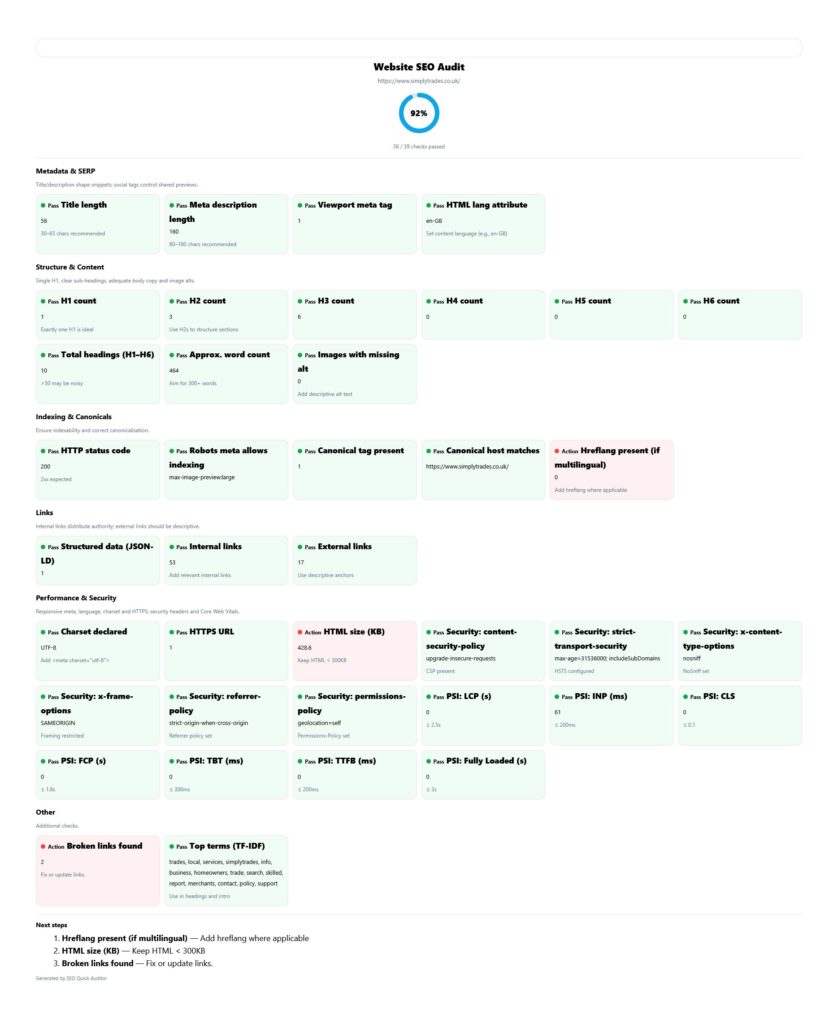
Test 1 Header
Test 2 Header
Test 3 Header
The Complete Guide to Modern Search Engine Optimisation (SEO) for Business Websites
Search Engine Optimisation (SEO) has become one of the most important digital marketing strategies for businesses looking to attract more customers online. Whether you operate a local plumbing company, an online eCommerce store, a legal practice, or a nationwide service provider, improving your website’s visibility in Google and other search engines can significantly increase traffic, enquiries, and revenue.
Modern SEO is no longer simply about adding keywords to a page. Search engines now evaluate hundreds of ranking factors including page experience, website performance, accessibility, mobile usability, content quality, backlinks, structured data, internal linking, and user engagement signals. Websites that provide useful, trustworthy, and well-organised information are generally rewarded with higher rankings than those relying on outdated optimisation techniques.
Why SEO Matters
Over 90% of online experiences begin with a search engine, making organic search one of the most valuable traffic sources available. Unlike paid advertising, SEO can continue generating visitors long after content has been published.
Benefits of SEO include:
-
Increased organic website traffic
-
Higher quality leads
-
Improved brand credibility
-
Better user experience
-
Long-term marketing return on investment
-
Greater visibility in local search results
-
Increased conversion opportunities
Businesses that consistently invest in SEO often experience sustainable growth while reducing their dependence on paid advertising campaigns.
Understanding Google’s Ranking Factors
Google’s algorithms evaluate websites using hundreds of signals designed to identify pages that best answer a user’s search query.
Some of the most important ranking factors include:
High Quality Content
Content should answer the user’s questions clearly and comprehensively. Pages should demonstrate expertise, experience, authority, and trustworthiness (E-E-A-T). Content should be original, well structured, easy to read, and updated regularly.
Technical SEO
Technical SEO ensures that search engines can crawl and index your website efficiently. Important technical elements include:
-
XML sitemaps
-
Robots.txt configuration
-
HTTPS security
-
Canonical URLs
-
Structured data
-
Crawl efficiency
-
Indexability
-
Correct HTTP status codes
Website Speed
Page speed directly affects both rankings and user satisfaction. Slow-loading pages increase bounce rates and reduce conversions.
Performance improvements include:
-
Compressing images
-
Using modern image formats
-
Browser caching
-
Content Delivery Networks (CDNs)
-
Efficient CSS and JavaScript loading
-
Server-side optimisation
Mobile Friendliness
With Google’s mobile-first indexing, websites must provide an excellent experience on smartphones and tablets. Responsive layouts, readable text, accessible navigation, and fast loading speeds all contribute to better rankings.
Keyword Research
Effective SEO begins with understanding what your customers are searching for.
Keyword research helps identify:
-
Primary keywords
-
Secondary keywords
-
Long-tail keywords
-
Question-based searches
-
Local search phrases
-
Transactional search intent
-
Informational search intent
Rather than targeting a single keyword repeatedly, modern SEO encourages using natural language and related semantic terms throughout the content.
For example, an article about website optimisation may naturally include phrases such as:
-
SEO audit
-
technical SEO
-
page speed
-
search rankings
-
keyword optimisation
-
on-page SEO
-
off-page SEO
-
local SEO
-
Google rankings
-
organic traffic
On-Page SEO Best Practices
Every page should include properly optimised elements including:
Title Tag
The page title remains one of the strongest on-page ranking signals. It should clearly describe the page while including the primary keyword naturally.
Meta Description
Although not a direct ranking factor, an engaging meta description improves click-through rates from search results.
Heading Structure
Pages should use a logical heading hierarchy:
-
H1 for the main title
-
H2 for major sections
-
H3 for subsections
Clear headings improve readability for both users and search engines.
Internal Linking
Internal links help distribute authority throughout a website while guiding visitors towards related content.
Examples include linking to:
-
Contact pages
-
Service pages
-
Blog articles
-
Pricing pages
-
Frequently Asked Questions
-
Case studies
Image Optimisation
Images contribute significantly to user engagement but should also be optimised for SEO.
Best practices include:
-
Descriptive filenames
-
Appropriate image compression
-
Modern formats such as WebP
-
Meaningful ALT text
-
Lazy loading where appropriate
-
Correct dimensions
-
Accessible captions where beneficial
Well-optimised images may also appear in Google Images search results.
Accessibility and User Experience
Accessibility benefits every visitor while helping search engines better understand website content.
Important accessibility considerations include:
-
Descriptive link text
-
Keyboard navigation
-
Colour contrast
-
Form labels
-
ALT attributes
-
ARIA labels where appropriate
-
Logical heading structure
-
Readable font sizes
Improving accessibility often improves usability and engagement metrics simultaneously.
Local SEO
Businesses serving specific geographic areas should optimise for local search.
Important local SEO factors include:
-
Google Business Profile optimisation
-
Consistent Name, Address and Phone Number (NAP)
-
LocalBusiness Schema
-
Customer reviews
-
Location pages
-
Local backlinks
-
Embedded maps
These signals help businesses appear in local search results and map listings.
Measuring SEO Success
Successful SEO campaigns rely upon measurable data rather than assumptions.
Useful metrics include:
-
Organic traffic
-
Keyword rankings
-
Click-through rate
-
Bounce rate
-
Conversion rate
-
Indexed pages
-
Core Web Vitals
-
Backlink growth
-
Page speed scores
-
Search impressions
Regular SEO audits allow businesses to identify issues before they affect search visibility.
Continuous Improvement
SEO is an ongoing process rather than a one-time task. Search engines continuously update their algorithms while competitors improve their own websites.
Regular reviews should include:
-
Content updates
-
Broken link checks
-
Performance optimisation
-
Accessibility improvements
-
Structured data validation
-
Technical health monitoring
-
Competitor analysis
-
Keyword performance tracking
Businesses that continually improve their websites generally achieve stronger long-term rankings than those that neglect ongoing optimisation.
Conclusion
A successful SEO strategy combines technical excellence, high-quality content, excellent user experience, accessibility, fast website performance, and continuous optimisation. Rather than chasing quick wins or outdated tactics, businesses should focus on creating websites that genuinely help their users.
Regular SEO audits can uncover opportunities to improve page speed, content quality, internal linking, structured data, accessibility, mobile usability, and keyword targeting. By addressing these factors consistently, organisations can build stronger search visibility, attract more qualified visitors, and increase conversions over time.
Whether your goal is improving local search rankings, increasing organic traffic, generating more enquiries, or enhancing overall website performance, investing in a comprehensive SEO strategy remains one of the most cost-effective digital marketing decisions available.